Industrial-grade Vacuum Technology in London Office Environments: HEPA Filtration, Noise Levels, and Why It Matters

The important end of a commercial vacuum is the end the air comes out of.

Everyone buys on suction. Facilities managers ask how powerful it is, cleaners talk about pickup, the spec sheet leads with wattage in a big bold font. Meanwhile the thing that decides whether a machine improves an office or quietly fouls it happens at the exhaust, where the air the vacuum has just drawn in comes back out into the room – carrying, or not carrying, the fine dust it was meant to trap.

Get that end wrong and you’ve bought an expensive way to move dust off the carpet and into the air, where people breathe it.

What is a commercial vacuum actually for in a London office?

Picking up the visible stuff is the easy ninety per cent. Crumbs, grit, biro lids, the shredded corner of a Pret bag under a desk – any machine with a motor manages that much. The job that actually earns the money, and the one cheap machines quietly flunk, is the fine particulate. The trade calls it the fines: the sub-visible dust, the skin cells and fibre, the pollen, the traffic-borne PM2.5 that drifts in off the Euston Road and settles into every carpet tile in the building.

The fines are the fraction small enough to hang in the air when disturbed and small enough to travel deep into a lung. A vacuum with poor filtration takes those fines, stirs them up off the floor and puffs them back out the far end finer and more airborne than they were sitting still. So you’ve taken settled dust, harmless on the carpet, and turned it into respirable dust at head height in an open-plan office. In a sealed City tower where the windows are decorative and the air just recirculates, that dust has nowhere to go but round the floor plate all afternoon.

I once got called into a media agency off St John Street in Clerkenwell where half the floor was blaming the air-conditioning for their itchy eyes and endless sniffles. The air-con was fine. Their contractor was running a knackered upright with a torn bag every afternoon at three, refilling the room with everything it lifted. New machine, problem gone in a fortnight. Nobody ever did apologise to the air-con.

The dust you can’t see is the dust that matters

London hands a vacuum more of the fines than most cities do. There’s always a floor being stripped out somewhere nearby, and refits shed a fog of gypsum and brick dust that finds carpet three storeys down through the smallest gap in the risers. Add the diesel particulate the traffic has laid down over decades, still lurking in the fabric of every older building, and the fine-dust load in a Farringdon office runs higher than whatever the filter’s manufacturer assumed when they printed the claim on the box.

What does “HEPA” actually guarantee – and what does it not?

Here’s where the marketing turns slippery, because “HEPA” is four letters that a great many machines wear without ever earning them.

Real HEPA is a defined thing. Under the European standard EN 1822, a genuine HEPA filter carries a grade – H13 traps at least 99.95 per cent of particles at the hardest possible size to catch, H14 at least 99.995 per cent. That hardest size, around three-tenths of a micron, is the most penetrating particle size, and it’s a genuine quirk of physics: particles both larger and smaller than that are easier to capture, so a filter that holds the line right there holds it everywhere else too. That’s the number with meaning behind it. “EN 1822, grade H13, 99.95 per cent” is a claim you can hang a health argument on.

“HEPA-type.” “HEPA-like.” “HEPA-style filtration.” Not one of those is graded, tested, or promising you a single thing. They’re words chosen to stand next to the real one and borrow its coat, and they appear on a startling number of machines sold into London offices. A filter badged “HEPA-type” might catch a fair share of the fines, or it might catch very little – the phrase commits to nothing, which is exactly why it was reached for.

A HEPA element bolted to the back of the machine isn’t the end of it either. A properly built vacuum filters in stages: the bag or bin catches the bulk, a pre-motor filter takes the next tier down, the HEPA element mops up the finest fraction last. Skip the earlier stages and the HEPA filter chokes within a week, the suction collapses, and some poor soul pulls the filter out to “let it breathe” – which is the single most common way a HEPA vacuum stops being one.

Why a HEPA filter in a leaky machine is theatre

Now the part almost nobody checks, and the one I’ll cheerfully die on a hill about. A HEPA filter only does anything if all the air is forced through it.

That sounds too obvious to say, and it gets ignored daily. If the body of the machine isn’t sealed – a gap around the filter housing, a lid that no longer seats properly on a tired seal – then the air behaves like air and takes the easy road, which is around the filter rather than through it. You can fit the finest H14 element made in Germany, and if the machine leaks, the fines stream out through the seams unfiltered while that immaculate filter sits there looking like a clear conscience. This is the whole distance between “sealed HEPA system” and “fitted with a HEPA filter,” and it’s a distance most buyers never think to ask about. A machine waving a HEPA filter with no sealed body behind it is theatre. Costly theatre, in a nice livery.

Why does a vacuum’s noise level decide when you can use it?

For decades London offices were cleaned overnight, so the noise a vacuum made was nobody’s problem. That has changed, and quickly. Buildings would rather not light and heat a whole empty tower at eleven at night for a cleaning crew when energy costs what it now costs, insurers prefer fewer lone workers after dark, and daytime cleaning has become ordinary across the City and Canary Wharf. Which puts the vacuum in the room while people are trying to work.

An older commercial upright, or a domestic machine pressed into service, can push past eighty decibels. Loud enough that running it down an occupied Holborn office at two in the afternoon makes the cleaner a nuisance through no fault of their own – and loud enough, across a full shift, to start mattering for that cleaner’s own hearing. A well-engineered quiet machine sits around sixty. That twenty-decibel gap is the difference between a vacuum you can run past someone mid-call and one that clears the meeting room. The Quiet Mark, awarded by the Noise Abatement Society, exists to point at the machines that took the trouble.

The daytime cleaning problem

There are two people in this, and the client usually remembers only one. There’s the office worker wanting to hear themselves think. And there’s the operative behind the machine for hours, whose ears the Control of Noise at Work Regulations 2005 are actually written to guard – the lower action value lands at eighty dB(A), which plenty of older vacuums sail straight past. Volume isn’t even the whole of it. A machine at sixty-two decibels with a low, smooth note is far easier to sit near than one at sixty-two with a thin electric whine, because what the ear objects to is the pitch as much as the level. The better manufacturers tune the note the machine makes. The number on the meter is only half of what you’re paying for.

Is a more powerful motor actually a better vacuum?

No. And the belief that it is has shifted an enormous number of bad machines.

Wattage measures what the motor swallows, not what the machine cleans. A 1,400-watt vacuum draws more electricity than a 900-watt one; whether it actually moves more air through the nozzle depends on the airflow and the shape of the cleaning head far more than on the motor’s appetite. When the EU capped corded vacuum motors at 900 watts in 2017, a good part of the industry forecast feeble machines, and the serious manufacturers simply engineered the same cleaning out of less power – they’d never been leaning on raw wattage to begin with.

A vacuum that roars is usually leaking air somewhere past its motor and turning the waste into noise; the roar is wasted air, the sound of suction going missing. The buyer who stands in the demo, hears the thing howl and murmurs “now that sounds powerful” has been trained by forty years of bad design to read a fault as a virtue.

What airflow and water lift actually tell you

Want to compare two machines honestly? Ignore the watts and ask for two numbers. Airflow, in litres per second, is how much air the machine actually moves – that’s what lifts the fines up out of the pile and carries them to the bag. Water lift, sometimes called sealed suction, is how hard it can pull – that’s what hauls grit out of the depth of a heavy contract carpet. A machine strong on both while sipping its 900 watts will quietly beat the two-kilowatt monster your predecessor signed off, and beat it without emptying the room.

So which machine belongs in which building?

Depends on the floor, and anyone who gives you one answer for every site is selling something. Detailed work around a dense desk layout in a Soho creative office wants a cylinder or tub machine you can steer into corners. A big open Canary Wharf floor plate wants a cordless backpack, for the speed and, just as much, for losing the trailing cable that turns into a trip claim the moment someone’s carrying coffee. Long corridor runs are upright territory. Whatever the format, the filtration and the sealing standard have to hold the same across all of it – the shape of the machine is only ever about what suits the room.

The Henry question

Somebody always asks about Henry. And I’ve nothing against the little red tub – Numatic build them properly down in Chard, in Somerset, and with the right HepaFlo bags and the commercial spec they filter well and run for years. The mistake is assuming the smiley face means the machine is sorted for the job. A Henry off the shelf on a domestic filter, run eight hours a day across a City floor, is doing work it was never specified for, and pushing a fair share of the fines back out as it goes. Buy the machine for the building. Not for the face.

an elegant row of late Georgian townhouses on a quiet residential street near Grosvenor Square in Mayfair, London

Why Mayfair and Belgravia Offices Demand White-Glove Commercial Cleaning Standards

There’s a hedge fund on Mount Street that runs its own white-glove test, except it isn’t a glove. It’s the managing partner’s shirt cuff. He rests a forearm on the reception desk while he waits for his car, and if the cuff comes away with a grey line on it, somebody hears about it well before lunch.

That’s the standard. Not “clean.” Unmarked.

An office in Mayfair or Belgravia is not an ordinary commercial cleaning job wearing a better postcode, and the firms that treat it like one get found out inside a month.

What makes a Mayfair office different from an office anywhere else?

The buildings first. Most of Mayfair’s offices are nothing a business park would recognise as an office. They’re Georgian townhouses – four and five storeys of listed brick and plaster off Berkeley Square and up Grosvenor Street – with a hedge fund or a family office poured into rooms built as drawing rooms two centuries ago. The cornicing is original and the staircase is listed. The floor is very often the parquet the original builders laid, and you cannot put a scrubber-dryer anywhere near it.

Then the tenants. Mayfair money is quiet money. Private equity on Curzon Street, a single-family office tucked over a gallery on Cork Street – the sort of quiet name you’ve never heard precisely because you were never meant to. For these people the house is a statement of seriousness before a word is spoken, and a smeared glass door or a pale ring left on the boardroom table reads to a visiting client as a hairline crack in the whole edifice. Fair or not, that’s how it lands.

The Grosvenor Estate is watching

Nearly all of Mayfair and almost the whole of Belgravia sits on land the Grosvenor family has held since the early 1700s, and the estate has never once stopped minding how its buildings look.

In Belgravia it’s written into the fabric of the place. Thomas Cubitt built those wedding-cake stucco terraces around Belgrave Square and Eaton Square for the Grosvenors in the 1820s and 30s, and the leases that govern them still carry covenants about upkeep and appearance. A landlord’s surveyor who walks past a tired-looking front-of-house is not a problem any tenant wants climbing the chain. The cleaning is part of how a tenant keeps the estate content. Nobody puts that in the contract, and everybody in the building knows it anyway.

What does “white glove” actually mean once you’re inside the house?

Every mid-market firm with a nice logo puts “white glove” on the website, so here’s what it means on the ground in W1 rather than in a brochure.

The work is invisible, and so are the people doing it. No trolley parked across reception at half past eight. No wet-floor cones flanking the front door as the first partner walks in. In a Georgian house where the whole point of the ground floor is the impression it makes in the ninety seconds a visitor stands in it, the cleaning has to have happened and to have left no trace of itself, like a stage reset between scenes.

It also means detail at a level that would look neurotic anywhere else and is simply the baseline here. The underside of the brass stair rail. The skirting behind the umbrella stand. The particular corner of the boardroom glass where the low winter sun through the sash window finds every smear at four in the afternoon.

The measure is what you don’t notice

You judge an ordinary office clean by what’s been done. You judge this one by what you can’t find. Nobody in that Mount Street reception thinks, each morning, how clean it looks. They only ever notice the day the cuff comes up grey.

Why do the surfaces themselves demand specialist care?

This is the part that separates a genuine white-glove operation from a merely expensive one, and it’s where most of the harm in these buildings gets done – slowly, by people trying their best with the wrong bottle.

Nearly every surface in the house can be wrecked by the wrong product, most of them without a sound. Marble is the first landmine, because it’s all over these receptions and washrooms, and marble is calcium carbonate, which means anything acidic eats it. Not scratches it. Eats it. The polished top goes dull and faintly rough exactly where the acid sat, and there’s no wiping that back – it returns only with a re-hone and re-polish by a stone specialist, at a price that makes the client go quiet.

I got called to a reception on Grosvenor Street where a perfectly diligent night cleaner had spent a month spraying supermarket limescale remover around the water cooler, sure she was being thorough. By the time anyone joined the dots there was a dull halo etched into the marble in a ring the exact shape of the cooler’s drip zone. That floor cost more to put right than a year of the cleaning contract.

Then the parquet, the other thing people ruin with kindness. A wet mop on a two-hundred-year-old timber floor drives water down into the joints, the blocks swell and lift, and the herringbone in the entrance hall starts to cup and tent. These floors want a barely-damp cloth and a great deal of restraint. Brass wants a non-abrasive polish and a soft cloth, not the pink cream that strips the lacquer and leaves the metal tarnishing twice as fast a fortnight on. Silk wallpaper wants almost nothing at all. Gilt frames, leather chair backs, the veneer on a partner’s desk, the marble again in the client WC – every one of them has a right method and several wrong ones, and the wrong ones are nearly always the faster ones, which is the whole trouble.

There’s the high stuff, too, which the average contract forgets exists until a bulb goes. The plaster cornice sixteen feet up. The chandelier in the first-floor meeting room that hasn’t been touched since the last tenant, greying quietly above everyone’s heads. Add the tops of the tall sash windows, where London’s air leaves a film you only see when the sun’s low and a client’s already sitting there. Reaching that work safely, in an occupied listed building, without a tower scaffold blocking the hall all morning, is its own small trade – and it’s the first thing to fall off a schedule when a firm has priced the job too keenly to afford the hours.

Vinegar on marble is vandalism

Here’s an opinion that annoys people. The fashion for “natural” cleaning – the white vinegar, the lemon juice someone’s brought in from home because it’s kinder than the blue stuff – is a menace in a Mayfair house, and I’ll defend that to anyone. Vinegar is acetic acid. Lemon is citric acid. On a marble reception desk they do exactly what the harshest chemical does, arguably worse, because they turn up wrapped in the confidence of being gentle. On stone, “green” only tells you nobody read the label with the floor in mind.

Who is actually allowed through the door?

A cleaner in a Mayfair hedge fund walks past open screens and term sheets left face-up on the desks, and there’s usually a whiteboard nobody thought to wipe. Discretion in these buildings is a service in its own right, running alongside the cleaning the whole time and mattering every bit as much.

Which is why vetting here goes well beyond the two references a normal contract asks for – DBS checks and a verified work history going back years, often with a signed confidentiality agreement covering the cleaner as tightly as it covers the account manager. The firms that hold this work keep the same faces on the same building for years, because trust is built on the seventh visit rather than the first, and a house full of confidential money does not want an agency temp it’s never met wandering the third floor at seven in the evening.

Belgravia and the embassy problem

Belgravia lifts the bar again, because Belgravia is where the embassies are. Belgrave Square alone is ringed with them, flags on half the porticoes, and a diplomatic building is a different order of sensitive altogether. Contractors working those addresses may need security-cleared staff and escorted access, with a level of background checking a family office three streets away would think excessive and an embassy considers Tuesday. Not every firm can even be put forward. Most can’t.

Why does a day porter earn its keep in these buildings?

Because the front of house has to be immaculate at eight in the morning and still immaculate at half past five, and a night crew that clocked off at six can do nothing about the coffee that goes over in reception at eleven.

The good Mayfair and Belgravia buildings run a day porter – a discreet, well-presented member of staff who lives in the building through the working day, keeping the ground floor faultless and catching the spill before the client sees it rather than eight hours later. The role blurs at the edges into something more than cleaning: resetting the boardroom between back-to-back meetings, or quietly taking in a delivery so a courier never crosses reception at the wrong moment.

One porter over a whole night crew

One porter who’s there at the right moment is worth more in these houses than a whole night crew that comes and goes in the dark. The night team does the deep work, the floors that need hours and an empty building. The porter holds the line all day, and in a house whose entire value is the impression it makes, the line is the product.

That’s the cuff on the Mount Street desk, in the end. Somebody has to see to it that it comes up clean at eleven in the morning, with no cleaner anywhere in sight.

Why London Office Cleaning Contracts Should Always Include a Detailed Scope of Works Clause

Six months into a contract, a facilities manager rings me. Not a client of mine – a friend in the trade, asking me to cast an eye over it – because the cleaners she’d inherited “weren’t doing the kitchen properly.” So I ask to see the contract. Two pages. The relevant clause reads, in full: “The Contractor shall keep the premises in a clean and tidy condition.”

That’s the whole scope. That’s everything.

There was no argument for her to win, because there was nothing on paper to argue about.

What actually goes wrong when the scope is vague?

Nearly every cleaning dispute I’ve watched unfold in a London office traces back to the same root. The client thought they were buying one thing. The contractor thought they were selling another. Nobody wrote down which, so both were free to be quietly, reasonably, completely wrong about each other. The client pictures the fridge emptied and wiped out every Friday and the glass partitions kept clear of finger marks. The contractor priced a bin-empty, a vacuum and a wipe-down of the desks, five nights a week, and not a thing beyond it. Both parties are behaving in good faith. Both are heading for a fall.

Vagueness always resolves in somebody’s favour, and it is almost never the client’s. When “clean and tidy” is the whole of the standard, the contractor is the one who gets to decide what clean and tidy means, and they will decide it at precisely the level they costed. Push them on it and they’ll point at the clause, fairly enough, and explain that what you’re describing is a variation they’d be glad to quote for. So now you pay twice. Once for the vague version you signed, and again for the version you had in your head all along.

That’s the row. Six months in, every single time.

The “as required” trap

The two most expensive words in a cleaning spec are “as required.”

They sound like coverage. They are the opposite of it. “High-level dusting as required” means the tops of the partitions get done when the contractor judges it required, which turns out to be roughly never, because the person judging is the person who’d have to pay someone to climb the steps. “Carpets cleaned periodically,” with no period actually named, is a task that lives permanently in next month. If a frequency isn’t a number – weekly, monthly, twice a year – then it isn’t a commitment. It’s a word standing where a commitment should be, keeping the space warm.

What should a proper scope of works actually spell out?

A scope worth the paper it’s printed on does three things without flinching: it names every task, ties each task to a specific area, and pins each one to a stated frequency. Miss any of the three and the gap becomes the thing you argue about eighteen months later.

Start with the frequency split, because it’s the backbone. Daily tasks are the ones people picture: bins out, desks wiped, kitchen worktops cleared and cleaned, hard floors mopped and carpets vacuumed, washrooms scrubbed and restocked, the glass entrance doors spot-cleaned of the day’s handprints. Weekly tasks are the ones that quietly slip: skirting boards, the full run of internal glass, telephone and desk sanitising, the fridge if you’re lucky enough to have it named. Then the periodic column, which is where the real money and the real trouble both live – high-level dusting, carpet extraction, internal window cleaning, hard-floor buffing, the deep kitchen clean.

Each task needs an area written against it. A proper spec carries a floor-by-floor, room-by-room breakdown: reception, the third-floor kitchenette, the two accessible WCs on each level, the client-facing meeting rooms that matter far more to the impression you make than the store cupboard nobody ever sees. “Clean the office” is not an instruction. “Vacuum and spot-clean the second-floor breakout area nightly, extract the carpet quarterly” is.

And each task needs a standard you can actually check it against. This is where a decent spec leans on something like the British Institute of Cleaning Science appearance standards rather than a pile of adjectives. “Sparkling” is not a measurement. “No visible debris, no streaking on glass, dispensers filled” is one. When the standard is checkable, the monthly walk-round takes twenty minutes and settles matters. When it’s a mood, the walk-round is just two people disagreeing about the word “clean” all over again.

The dull clauses matter as much as the glamorous ones, and they’re exactly the ones a thin contract skips. Access hours – is this a night clean wrapped up before the building opens, or the daytime presence that’s become normal since everyone drifted back to the office three days a week? Keys, alarm codes, the security escort for the comms room. Whether the two hours on site mean two cleaners for an hour or one cleaner stretched across a whole floor they can’t realistically cover. Put the hours in. Put the headcount in.

The periodic tasks are where the money hides

Everyone fixes on the nightly list, because that’s the visible part, the bit you can see wasn’t done. The disputes almost all live one column across.

Deep cleans, carpet extraction, high-level work, external glass – these are expensive and infrequent, and they’re the first things a keen quote goes silent about. A contractor bidding low knows exactly what they’ve left out. They’ve priced the nightly service to win the tender and left the periodic tasks either unmentioned or buried under “as required,” so that when the carpets in your Fitzrovia media office go grey and flat a year and a half in, the deep clean turns up as a fresh invoice rather than a thing you were sure you’d already bought. Name the intervals. Twice-yearly carpet extraction, quarterly high-level dusting, monthly hard-floor maintenance – whatever the site actually needs, but a number, on the page, agreed by both signatures.

So who’s buying the toilet roll?

Here’s the small clause that starts more rows than any other, pound for pound.

Consumables. The loo roll, the hand soap, the blue roll in the kitchen, the bin liners, the hand towels, the little plug-in air fresheners nobody will admit to caring about right up until they run out. Somebody supplies all of it and somebody pays for all of it, and in a vague contract that somebody stays gloriously undefined until the Monday morning the dispensers are empty and reception is fielding the complaints.

The bin-liner question

Decide it in writing. Either the contractor supplies and bills consumables at cost plus a margin, or the client buys their own stock and the cleaners simply fit and refill. Both work. What doesn’t work is discovering, three weeks into a contract in a busy Soho serviced office, that nobody ever agreed which, and the toilet roll has become a small diplomatic incident with an email chain of its own.

Why do the cheapest quotes come with the thinnest scopes?

Because the thinness is the strategy.

I’ll say it plainly, since somebody should: the lowest quote on a London cleaning tender is very often the one to bin first. Not always. But the gap between the cheap bid and the sensible one is rarely down to efficiency. The cheap bid buys its headline number by narrowing the scope – quietly, deliberately – so the money finds its way back later through variations and periodic “extras” a fuller spec would simply have folded into the monthly figure. On the contractor’s side, a vague scope is usually a choice. It’s a pricing tactic, and a fairly clever one, and you can’t really blame someone for playing a game the tender set up.

The managing agent’s copy-paste spec

The other reliable source of thin scopes is the managing agent running the building. A managed floor in the City or over at More London tends to arrive with a cleaning spec the agent has pasted straight from the last building, and the one before that, tailored to none of them. It’ll list tasks for a marble reception you haven’t got and say nothing at all about the two kitchens you have. Read it as though it were written for your floor specifically, because it wasn’t, and every gap in it is yours to inherit.

What happens when someone asks for something that isn’t in the contract?

Something always does. A leaving do in the boardroom that leaves forty prosecco glasses and a carpet full of trodden crisps. Builder’s dust settling over every surface for a fortnight after the refit on the floor above. A burst pipe up in the ceiling void that comes through on a Sunday and turns Monday into a salvage operation. None of it belongs in the nightly scope, and none of it should.

A contract worth signing says so, and says what happens next. It carries a variation mechanism – a clause setting out how out-of-scope work is requested and priced before anyone lifts a mop, ideally with an agreed hourly and day rate already sitting in the schedule so there’s no haggling in the middle of a crisis. Without one, every unplanned job becomes a fresh negotiation held at the worst possible moment, when the thing plainly needs doing and you’ve no room left to bargain.

Changing hands, and the TUPE surprise

Then one day the contract changes hands, and the scope starts mattering in a way people rarely see coming. When a cleaning contract in the UK moves from one provider to the next, TUPE usually applies – the existing cleaning staff transfer across to the incoming contractor on their existing terms and conditions. The new provider inherits the people, but they price and deliver against the scope. A fuzzy scope, then, doesn’t stop causing trouble when your current cleaners walk. It gets handed on, unresolved, to the next lot, who are left guessing at what “clean and tidy” was ever supposed to mean while absorbing a wage bill they didn’t set.

Which is roughly where my friend’s facilities manager found herself. Two pages, one useless sentence, and a kitchen nobody could prove was in or out.

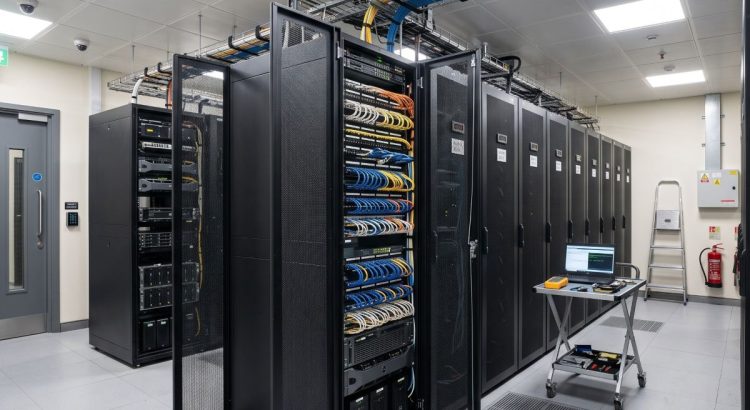
a standard enterprise server room inside a large corporate office building in London

How to Maintain a Clean Server Room in a London Office Without Voiding Equipment Warranties

Most of the server rooms I get called into across Greater London aren’t server rooms. They’re cupboards.

A converted stationery store off a corridor in Clerkenwell. A partitioned corner of an open-plan floor in Shoreditch. A rather beautiful stretch of exposed Victorian brick in Farringdon that someone decided to fill with forty grand of switches and a wall-mounted split unit that wheezes when it thinks about working. The kit inside is doing serious work. The room it sits in was an afterthought, and that mismatch is where most of the trouble starts.

Why does a bit of dust matter so much in the first place?

Dust in a comms room isn’t a cosmetic issue. Every fan in that rack pulls air across hot components, and it drags whatever is floating in the room in with it. Fine particulate settles on heat sinks. It clogs intake filters. It coats fan blades until they spin slower and louder, and the kit starts running hotter than it was ever designed to. Hot kit throttles. A throttled processor behaves like a cheaper processor you didn’t pay for, and if the thermal cycling carries on long enough it works its way into solder joints and spinning drives, shortening their lives in ways nobody notices until a Tuesday morning when a drive doesn’t come back up.

Then there’s static, which is the part people forget.

Dry, dusty air holds a charge. Drag a nylon-bristled brush or a domestic vacuum hose across a rack in a low-humidity room and you can generate enough electrostatic discharge to wound components you never even touched. You won’t see it happen. ESD damage is usually latent – the board keeps working for weeks, then fails early and for no obvious reason. That’s the cruel part. The clean that caused it is long forgotten by the time the fault shows up.

London dust has its own character

The dust settling in a City comms room is not the soft grey fluff you’d sweep up in a house out in Zone 4. Central London has been a building site for years and shows no sign of stopping. The Elizabeth line works, the endless office refits around Liverpool Street, the tower going up two doors down – all of it throws fine mineral grit and brick dust into the air, and a good share drifts indoors and settles wherever the air handling carries it. Add diesel particulate off the traffic and you get a dust grittier and more abrasive than the domestic sort. It doesn’t only insulate the kit. It scours it. And in older converted buildings, which is half of London’s office stock, you get plaster dust sifting down from the fabric of the place itself, worst of all anywhere near live works.

How can the cleaning itself void your warranty?

This is the bit that catches people out.

When you buy a server or a switch from Dell, HPE or Cisco, the warranty arrives with conditions attached. Tucked into the environmental specification is a set of operating limits – a temperature band, a humidity band, and an assumption that the equipment lives somewhere reasonably clean and controlled. The manufacturers lean on the ASHRAE thermal guidelines for these figures, and they mean them. Run the kit consistently outside those bands, or let it sit in a filthy environment, and you have handed them a tidy reason to decline a claim.

Cleaning can breach those conditions in a handful of ways, every one of them avoidable. Spray a liquid cleaner near an energised rack and you invite exactly the sort of moisture ingress that voids cover outright. Pop the cap on a can of compressed air and you’ll drive dust deeper into the chassis instead of out of it, while the propellant leaves a residue or, tipped at the wrong angle, spits freezing liquid straight onto a board. I once watched a well-meaning office cleaner do real harm with a tin of air duster and nothing but good intentions.

What the small print actually says

Nobody reads the environmental section of a warranty until they’re arguing about a claim, so let me save you the trouble. The manufacturers don’t stipulate who cleans the room. What they stipulate is the condition it must stay in and the way the equipment has to be handled. No liquids near live equipment. No physical shock to the kit. An environment held inside the stated temperature and humidity, with contamination never allowed to build to the point of causing a fault. A cleaner who understands all that keeps you compliant. A cleaner who treats the rack like a bookshelf will not, and the fact that they were only trying to be helpful won’t appear anywhere in the rejection letter.

What does a safe server room clean actually involve?

Right. The practical part, which is where most of this article lives, because getting it wrong is so easy and getting it right is mostly discipline.

Start with the tools, because the wrong tools are how the damage gets done. Everything begins with a proper anti-static, HEPA-filtered vacuum. Not the Henry from the cleaning cupboard. A domestic vacuum does two unhelpful things at once: it builds static at the nozzle, and its filter is coarse enough that the finest, most damaging particulate goes straight through the motor and back into the room you are supposedly cleaning. A HEPA machine traps it. An anti-static one won’t grow a charge as you work. This single piece of kit is the whole difference between cleaning a server room and merely rearranging its dust.

For surfaces you want lint-free microfibre cloths, barely damp with an approved anti-static solution or plain deionised water, wrung out until they sit closer to dry than wet. You never spray anything directly at anything. You dampen the cloth well away from the rack, then you wipe. For the grille work and the fan intakes, soft anti-static brushes, and, where the room’s design allows for it, an ESD-safe compressed-gas system used properly – emphatically not a supermarket air duster held at arm’s length.

The order matters as much as the tooling. You work top down, always, because dust falls and there’s no earthly sense cleaning a floor you’re about to shower with grime from the racks above. External surfaces first: the tops of cabinets, the cable trays, the cold-aisle face of the rack. Then the intake filters, which in a hard-worked London comms room clog far faster than anyone budgets for. Then, and only then, the floor.

Humidity is the quiet half of the job, and a cleaner can wreck it without touching a single cloth. Prop the door open on a muggy August afternoon in Victoria, or run a damp method in a room already sitting near the top of its humidity band, and you nudge the environment past the very limits the warranty depends on. Keep the door shut. Keep water out. Let the room’s own conditioning work undisturbed.

Anyone with their hands near the kit wears a grounded ESD wrist strap. That is not negotiable and it costs almost nothing. You don’t yank cables to reach behind them. You don’t reseat anything. You don’t unplug a single thing to make your own life easier. The clean happens around live, running equipment, so slow and deliberate beats quick on every measure. A rushed server room clean is a contradiction in terms.

The zinc whisker problem nobody warns you about

Here’s the one that separates the people who understand these rooms from the people who don’t. If the room sits on a raised access floor – and plenty of the purpose-built ones in Canary Wharf and the City do – the void beneath it is where the real filth hides, and that void carries your cooling air, so anything lurking down there gets pushed straight up into the racks.

Older floor tiles were frequently electroplated with zinc, and over the years that zinc can grow tiny conductive filaments called zinc whiskers, microscopic metal hairs barely visible to the eye. Disturb the underside of an old tile carelessly, lift and drop it, scrape it with a stiff brush, and you can shake a cloud of these conductive slivers loose into the exact airflow that feeds the kit. They land on live boards. They bridge things that should never be bridged. And because the resulting failures look random, a room can chase intermittent faults for months without anyone twigging that the last underfloor clean set the whole thing off. If your London office sits in a building that has kept the same access floor since the nineties, and no shortage of them around Holborn and the City have, this is a genuine hazard and reason enough never to let a general contractor loose under the tiles.

Should your regular office cleaners go anywhere near it?

Short answer: no.

I say that as someone whose crews clean a great many London offices. The nightly team that empties the bins and vacuums the meeting rooms is very good at exactly that, and the server room wants locking and taking off their list entirely. That’s no slight on them. The room needs a different skill set and its own dedicated tools, and blurring the two jobs is precisely how a Henry ends up parked next to a live rack at eleven at night with the best will in the world.

Draw the line and write it down

Keep the room on its own schedule with a named, trained specialist attached to it. Log every entry to the room and escort the visit if the kit is sensitive. Decide in advance who is permitted to touch what, and put it in writing, because the moment that isn’t written down somewhere, a helpful soul with a duster will quietly fill the gap.

How often does a comms room in London actually need doing?

Quarterly is the sensible baseline for a decently sealed room in steady use – a deep clean of surfaces, filters and the underfloor void by someone who knows what a zinc whisker is.

But the baseline shifts with the building. If you’re within throwing distance of major works, and given the state of the roads around Old Street plenty of firms are, shorten the cycle, because construction dust doesn’t respect anyone’s schedule. Same if the room runs hot or has a raised floor that hasn’t been lifted in a decade.

The signs it’s overdue

You can usually feel it before you can measure it. The room’s a touch warmer than it was. The fans are noticeably louder, working against clogged intakes. There’s a grey film on the tops of the cabinets and a faint gritty resistance when you run a fingertip along a cable tray. And the honest truth is that by the time you can see dust on the racks, it’s been settling into the kit for a good while already.

The tin of compressed air, usually. It’s nearly always the tin of compressed air.

How to Tackle Cleaning Challenges in Large Corporate Offices: High-Traffic Areas and Extended Hours

Working with high-end global brands and cleaning their large corporate offices presents unique challenges, especially in high-traffic areas and during extended hours. With the constant flow of employees and visitors, ensuring a tidy environment is crucial for health, productivity, and morale.

This article explores effective strategies for tackling cleaning difficulties, from identifying problem areas to managing cleaning staff and choosing the right products. It also covers the importance of regular maintenance and deep cleaning, providing insights to keep your office sparkling clean.

Cleaning Challenges in Large Corporate Offices

Cleaning Challenges in Large Corporate Offices

Cleaning large corporate offices presents challenges that can impact the workspace’s appearance, employee productivity, and overall sanitation. High-traffic areas, shared spaces, and a mix of hygiene standards make office maintenance a bit tricky.

To keep corporate environments clean, it is crucial to understand these challenges to develop effective cleaning strategies. Cleaning services must be efficient and mindful of sanitation practices to create a safe and pleasant working environment.

Understanding the Unique Needs of High-Traffic and Extended Hours

In corporate environments where things get pretty busy, understanding how to clean during those extended hours is key to keeping your workspace healthy. With employees bustling around, surfaces and furniture can take a beating, so consistent cleaning is crucial. Moreover, the visibility of cleaning during these hours can affect employee health and morale. It’s all about balancing thorough cleaning and minimal disruption for effective office maintenance.

To make this work, consider scheduling cleaning teams during off-peak hours. This way, you can minimise interruptions while ensuring common areas like lobbies and break rooms receive a deep clean, especially where foot traffic is heaviest. Using eco-friendly cleaning supplies boosts employee wellness and aligns with the sustainability goals that many companies champion.

And let’s not forget about using discreet cleaning methods. This ensures that employees can stay focused on their tasks without being distracted by noise or the presence of cleaning staff. Therefore, a solid cleaning strategy is essential for creating a workspace that promotes hygiene and productivity.

Choosing the Right Cleaning Products and Equipment

Effective Cleaning Strategies for High-Traffic Areas

Implementing effective cleaning strategies for high-traffic areas is essential for keeping corporate offices clean and hygienic. Pay attention to lobbies, break rooms, and toilets since they require frequent care to manage dust, clean surfaces, and maintain overall sanitation.

Regular waste management and toilet upkeep improve the workspace’s appearance and boost employee health and morale. By tailoring your strategies to meet these areas’ specific needs, you can create a cleaner, more inviting environment for everyone.

Identifying and Addressing Common Problem Areas

Identifying and tackling common problem areas in corporate offices boosts cleaning effectiveness and keeps employee productivity on point. High-touch surfaces, cluttered storage areas, and pesky odours often slip under the radar but can seriously affect office hygiene. When cleaning visibility is spot on, maintenance staff catch these problems early. Taking proactive steps like pest control and odour elimination can save you from more significant headaches.

When you work in a clean and organised space, your focus and motivation naturally get a lift, leading to better performance. Keeping an eye on frequently touched areas—like doorknobs, keyboards, and shared equipment—helps minimise germs, which is a win for everyone’s health. A smart approach to managing clutter can streamline operations, making it easy for everyone to find what they need quickly.

By prioritising these elements, your company can create a safer workspace and a positive atmosphere that sparks employee collaboration and creativity.

Managing Cleaning During Extended Hours

Managing cleaning during extended hours is key to keeping things tidy without disrupting daily operations in corporate offices. Implementing well-planned cleaning schedules ensures everything gets done effectively and minimises disruption to your employees’ workflows.

Adhering to safety protocols is also very important, especially with all the focus on infection control. By strategically timing cleaning tasks, you can create a healthier workspace while respecting your employees’ working hours.

Strategies for Minimising Disruptions and Maintaining Cleanliness

You’ll want to implement some strategic cleaning schedules in your corporate office to keep disruptions to a minimum while ensuring everything stays clean. By bringing in professional cleaning services and using specialised cleaning methods, you can ensure high-traffic areas are spotless without undermining employee morale or productivity. A well-organised cleaning approach doesn’t just keep your workspace looking fresh; it also creates a positive atmosphere for everyone.

Consider scheduling deep cleaning during off-peak hours or opting for eco-friendly products that reduce harmful chemical exposure. Involving the staff in the cleaning process can also foster a sense of pride in their environment, enhancing workplace satisfaction.

Professional cleaning services that use the latest technology can customise their strategies to fit your office’s unique needs, ensuring cleanliness is achieved efficiently and effectively. By focusing on these strategies, you create a workspace that supports health and hygiene while encouraging a productive and harmonious atmosphere.

Choosing the Right Cleaning Products and Equipment

When selecting cleaning products and equipment for corporate offices, it’s essential to choose wisely, especially given the different surface types. Opting for eco-friendly products keeps you in line with chemical safety standards, helps maintain a clean environment, and supports employee health.

Furthermore, choosing the right equipment—such as microfiber cloths and vacuum tools—can significantly enhance the efficiency of your cleaning processes.

Factors to Consider for Different Types of Surfaces and Environments

When choosing the right cleaning products and solutions, it’s key to understand the different surfaces and environments in corporate offices. Each type requires specific cleaning solutions for optimal care and maintenance, whether dealing with hard floors, carpets, or office furniture. Figuring out how to tackle each surface effectively can boost cleanliness and extend the life of your office assets.

Factors such as foot traffic, material types, and potential allergens are essential when selecting the right cleaning agents in corporate settings. For example, hard floors might benefit from pH-neutral cleaners that won’t cause surface damage, while carpets need specialised solutions to lift stains without ruining the fabric. Regarding furniture, you’ll want gentle, non-toxic products to protect the finishes and keep the work environment pleasant.

By carefully assessing each surface’s needs and matching them with the proper cleaning techniques, you can enhance the workspace’s aesthetics and contribute to your team’s health and productivity.

Training and Managing Cleaning Staff

Training and managing your cleaning staff is key to maintaining high cleanliness standards in corporate offices. By implementing thorough training programmes, you equip your maintenance team with the skills and knowledge they need to do their jobs effectively.

This not only boosts customer satisfaction but also keeps your workspace looking smart. Moreover, fostering a team collaboration culture can enhance quality control and improve cleaning results.

Best Practices for Maintaining a High Standard of Cleanliness

To keep your corporate office spick and span, it’s crucial to implement some best practices that promote organisation and efficiency. Cleaning checklists can help streamline routine inspections and ensure you don’t overlook any critical tasks. A consistent cleaning schedule boosts cleanliness and creates a healthier working environment.

Conducting routine inspections allows you to spot areas that need extra attention, which helps prevent issues from escalating later. By involving your staff in the cleanliness efforts—such as assigning specific cleaning responsibilities—you can significantly boost morale and teamwork in the workplace.

Additionally, opting for eco-friendly cleaning products can demonstrate your commitment to sustainability, which is a win for your company’s image. A well-maintained office not only enhances productivity but also creates a welcoming atmosphere for both employees and clients.

Implementing Regular Maintenance and Deep Cleaning

Implementing regular maintenance and deep cleaning protocols is crucial for keeping your corporate office environment clean and healthy. Setting up a cleaning schedule that includes routine upkeep and thorough deep cleaning ensures that surfaces and equipment remain in tip-top condition.

Effective cleaning solutions for specific tasks can significantly enhance cleanliness and hygiene standards.

Tips for Scheduling and Conducting Deep Cleaning Tasks

Addressing potential scheduling challenges is crucial when scheduling and tackling deep cleaning tasks. This will minimise disruptions while keeping office standards up to par.

Cleaning technology can streamline the process, making it more efficient and ensuring quality control. Effectively planning your deep cleaning activities will promote a healthier work environment and boost employee morale.

This planning involves informing everyone about the cleaning schedule and which office areas are out of bounds. Implementing automated cleaning solutions like high-efficiency vacuums or UV sanitising tools can lead to more thorough cleanings while saving you valuable time.

Regular quality control checks are key to maintaining those cleaning standards. This demonstrates your commitment to workplace hygiene and builds employee trust and satisfaction. Ultimately, when your team sees genuine efforts towards cleanliness, it seriously boosts their motivation and productivity levels.

How to Implement The Latest Office Cleaning Techniques in Your London Workspace

If you aim to create a clean and healthy workspace in London, you’re in the right place! This guide will uncover the newest cleaning methods and technologies to transform your office environment. Whether it’s introducing specialised techniques that suit your office’s unique requirements or crafting a detailed cleaning strategy, this guide has you covered every step of the way.

Find out how to effectively train and educate your cleaning crew for top-notch performance, along with handy tips for continuous upkeep and enhancements in a workspace that boosts productivity and overall well-being.

Why it Matters for Your Workspace

Why it Matters for Your Workspace

Maintaining a clean workspace is crucial to boost productivity and keep your employees healthy. Office cleaning plays a key role in workplace cleanliness.

When you keep your office tidy, you’re setting the stage for focus and efficiency and creating a positive and inviting atmosphere for your employees. Research has proven that a clutter-free and organised workspace can ramp up motivation and dial down stress levels for your team, ultimately boosting their overall well-being.

By prioritising office cleanliness, you’re looking for your employees’ health and building a more productive and harmonious work environment. Investing in regular cleaning and keeping your workspace hygienic is fundamental to cultivating a vibrant workplace culture.

The Latest Cleaning Methods and Technologies

You’ve probably noticed that the world of office cleaning has come a long way with all the fantastic new techniques and technologies. Now, you can enjoy efficient cleaning methods that include cutting-edge disinfection techniques and fancy cleaning equipment to keep your work environment looking spick and span.

Overview of New Techniques

You’ve probably noticed how cleaning has changed lately. New techniques have shaken up how we keep things tidy, like using eco-friendly products and cutting-edge cleaning chemicals to make your office safer and greener.

These fresh methods don’t just give you a spotless workspace; they also help the environment. Using eco-friendly products like biodegradable cleaners and green disinfectants, offices can improve indoor air quality and reduce nasty chemical residues.

And get this—the latest cleaning chemicals are a game-changer. They fight germs and bacteria efficiently, creating a healthier work environment. When businesses adopt these practices, they’re looking out for their employees’ well-being and positively impacting the planet.

Benefits and Advancements

Thanks to cutting-edge cleaning tech, you benefit from advances in cleaning strategies, which offer top-notch cleaning solutions while following health and safety rules.

These modern cleaning methods give you a clean space and create a healthier and safer environment for everyone involved. Usiutilisinged cleaning techs like robotic cleaners and UV disinfection systems, cleaning tasks are now super efficient and effective. These tech innovations help thoroughly eliminate germs, bacteria, and viruses, reducing the risk of illnesses and keeping the space hygienic. These improved cleaning methods also save you money and time, making them the go-to choice for various industries and establishments.

Benefits and Advancements

Implementing Cleaning Techniques in Your London Workspace

If you implement the latest cleaning techniques in your London workspace, you can see a big difference in workplace cleanliness and hygiene. This will create a healthy environment for you and your employees and boost the overall appeal of your commercial space.

Adapting to Your Office’s Needs

Adapting your cleaning techniques to suit your unique environment is crucial for keeping your office neat. You’ll want to create flexible cleaning timetables that consider your office layout and ensure everything is organised. In an office environment, having adaptable cleaning timetables is a game-changer. You have varying levels of foot traffic, different working hours, and specific cleaning requirements to consider. By customising cleaning routines to align with how your office operates, you’ll reduce disruptions to your daily activities while maintaining cleanliness.

Do not underestimate the importance of your office layout when it comes to cleaning. The layout can dictate which cleaning methods are most efficient. For instance, open workspaces may require more frequent dusting and vacuuming to control airborne particles, whereas enclosed offices may need focused sanitation of high-touch surfaces to manage germs.

Let’s not overlook workspace organisation. A cluttered workspace can hinder cleaning and become a breeding ground for germs and pests. Establishing a system for storing documents, labelling supplies, and regularly decluttering can significantly impact maintaining a clean and germ-free workspace.

Creating a Cleaning Plan

Creating a Cleaning Plan

You must create a thorough cleaning plan consistent with your office policies to maintain high cleanliness standards.

Step-by-Step Guide for Implementation

When implementing your cleaning plan, you must follow a step-by-step guide to ensure you’re hitting all the cleaning marks, using a cleanliness checklist, and adhering to established cleaning protocols.

  1. First, create a detailed cleanliness checklist outlining all the areas in your space that need cleaning. This checklist should cover everything from surfaces to appliances and make sure your specific cleaning needs are customisable.
  2. After that, set up a regular cleaning schedule to ensure tasks are consistently handled. Assign responsibilities to your team members or household members with clear instructions on what needs to be done. Ensure everyone diligently follows the cleaning protocols to keep your environment clean and hygienic.

Training and Education for Cleaning Staff

Ensuring that cleanliness procedures are carried out correctly is crucial for your cleaning staff. You can nurture a workplace culture that values hygiene and effective cleaning practices by offering training and education.

Ensuring Proper Execution of Techniques

To ensure you’re nailing those cleaning techniques, set clear cleanliness goals and stick to established cleaning standards. This will help boost efficiency in your workspace. Keep a close eye on your cleaning practices to consistently meet those standards. Regularly inspecting and getting feedback from your team will help you spot any areas that need a little TLC and fix them quickly. Don’t forget to give proper training on cleaning procedures and the correct use of cleaning products to keep things spick and span. And hey, don’t skip out on scheduling deep cleaning tasks, like sanitising touch surfaces. That’ll keep your work environment healthy and in shape.

Ensuring Proper Execution of Techniques

Maintaining a Clean and Healthy Workspace

To keep your workspace in tip-top condition, you must ensure it’s clean and healthy. This enhances your employees’ well-being, improves air quality, and makes everyone happier. It’s all about staying on top of workspace maintenance and managing your office supplies like a pro.

Tips for Ongoing Maintenance and Improvement

To keep your workspace in top condition, you must stick to a regular maintenance routine, handle your cleaning budget wisely, and address any cleaning issues directly. These tips are crucial for maintaining a positive workplace atmosphere and improving your workspace.

When you’re consistent with your cleaning timetable, ensure no tasks slip through the net, keeping your work environment pleasant and hygienic.

While managing your cleaning budget, focus on high-traffic areas and invest in quality cleaning supplies for optimal results.

Being proactive and dealing with common cleaning challenges, such as stubborn stains or dust accumulation, can significantly impact the cleanliness of your office.

These efforts will boost your team’s morale and transform your workspace into a more welcoming and efficient environment.

Unique Ideas For Your Office Space

More and more professions are related to working at a computer desk. You are in the office for 8 hours or more a day, so it is pretty normal to take the time to turn it into a cosy place that will charge you, inspire, motivate, and calm you. How to create a cosy office? 

Working in an open office leads to stress, lack of concentration and low productivity. But working in a cosy office space increases efficiency, quality of work, motivation, inspiration for work, self-esteem, and employees’ happiness. Therefore, pay special attention to your office. 

A sense of comfort 

Bet on upholstered furniture and round shapes that create a feeling of cosiness. Choose and follow a style in the furniture to achieve the desired harmonious environment in the office. Avoid ultra-modern furniture solutions, which usually have the opposite of the desired comfort effect. 

Choose warm colours (mahogany, chestnut, orange, burgundy) that have a calming effect on furniture and walls. Or choose something fresher to give you energy and inspiration when you work (white, lime, yellow, lavender). The colour should be consistent with the nature of your work, character, and temperament. But avoid colourful patterns and a mixture of many colours in the room, which will harass your mind. 

Creating a cosy office – why and how?

Excellent addition to your office is air curtains/blinds in tune with the overall interior so as not to block the light in the room. 

Regarding flooring, a parquet or thick carpet creates a tangible warmth and comfort. 

A shelf or a small section of books, the ones you like and use in your daily work, are the perfect touch to your cosy work environment. Everything you regularly use while working must be at your fingertips. 

A personal touch in the office 

A small flower on your desk and a larger plant around you in the office are a good solution to create a harmonious, creative, calm and cosy office environment. 

And, of course, a photo of a loved one or family. Personal handwriting in your office is one of the important things to achieve comfort. 

You can consider custom furniture and your taste if you have more money. To do this, take the time to browse interior design magazines, and you can also consult with a designer to give you advice or make a realistic design. 

Home Office Tips

Home office organisational tips

If you work from home and are about to furnish an office corner, choose a sheltered corner of your home where you can have peace and privacy, even better if it is by a window. Regarding furniture for your office corner, it is essential to be as practical as possible in your choice, as you have limited space. Set on a small desk or table, with shelves on the walls, where you need things for your work, and a chandelier with a simple lantern, which falls low just above your workplace. One or two small landscape pictures or photographs on the wall next to you will create a feeling of space and inspire and soothe you. And to encourage concentration, productivity and work habits, you need to feel as comfortable as possible in your work area. For this purpose, pay special attention to the chair, which should be comfortable and easy on your muscles. 

Where to locate the home office? 

The location of the home office often makes it difficult for people. On the one hand, you need a work area. On the other hand, a place that is no less cosy and fits into the home’s overall atmosphere. The ideal option is to furnish a separate room, but not everyone can afford such a luxury, so you have to think practically and ideologically. 

You can set aside a work area in the corner of the living room or dining room, but in no case in the bedroom or children’s room. Some prefer to isolate themselves when working, so they “enclose” the home office with a screen. Others skilfully combine it with the atmosphere in the room. 

Another option for a home office layout is an unusable closet, built-in closet or niche in the wall. After light cosmetic repairs, including glueing coloured wallpaper and installing a small counter top instead of a desk and several shelves for organising things, the seemingly unnecessary space becomes a comfortable office corner. 

Home office furniture 

The choice of home office furniture depends on personal preferences for individual home styles. Traditionalists would choose a standard desk (preferably L-shaped to have more space to swirl), an office chair and a shelf for books and folders. 

If you want to break the situation: 

  1. Risk more non-standard solutions. 
  2. Use fabric furniture (shelf with pockets) to save space and look original. 
  3. Replace the oversized desk with a dining table, under which there is a shelf to arrange your belongings. 

Use an old coffee table as a removable document cabinet. Pre-paint the shelves or cover them with coloured foil. Put folders, notebooks and other stationery on it. A forgotten chest of drawers can also be helpful. Combine the upper drawers into a joint compartment with a drop-down door that works as a counter top. That way, when you’re not working, the home office will remain hidden. 

If you are a fan of vintage looks, look in antique shops for an old desk. Next to it put a large white chair with a soft cushion of floral motifs. Keep only a suitable pencil case and a jug full of fresh flowers on the desk. 

Some decorators recommend that you furnish your home office with wheel furniture so you can easily reorganise the space to be as functional as possible. 

Colour mood 

Usually, office colours are reduced to black, grey, or white. But since this is a home office, no one is limiting you. Orange, yellow, blue, and green can bring the mood to the work area. 

Good organisation. Working from home doesn’t mean you have to be in trouble. Arrange paper clips, staples, and flash drives in jars or suitable boxes. Put letters and recent documents in baskets. Arrange coloured folders or panels on the shelves. 

Non-standard pencil cases. Instead of the usual pencil cases, use an old can, painted in a playful colour or wrapped in twine. Another option is to arrange three identical porcelain cups with exciting decorations. Define one for pencils and pens, the second for markers, and the third for side tools (lines, scissors, etc.). 

Reminder board. The tasks do not end – to avoid missing any, put them on a particular board. It is easiest to bet on the cork. Another more broken option is to stretch a rope on one wall or from one end of the bookshelf to the other, to which you can hang your notes with the help of clips. 

Rules for Professional Office Cleaning

Rules for effective office cleaning

Do you want never to think about the office’s cleanliness again? Do you want to avoid wasting your employees’ time on inappropriate activities? Organising and getting quality professional office cleaning is not difficult at all. It’s just a few clicks for a monthly subscription. And the rest we will do – responsibly, qualitatively and professionally.
But to have an easy and correct relationship, we have developed several rules for professional office cleaning.

Why do we need to have rules for professional cleaning?

The rules for professional cleaning relate primarily to how we organise our work in your office. Specific requirements and clear commitments on our part – our experience shows that such cooperation is pleasant and functional for all. These rules allow us to organise the cleaning to avoid interfering with your work. We want to respond adequately and quickly to your needs, even when they change.

Rule 1: Clear services for professional office cleaning

Our first rule is related to the clear and specific list of commitments you want us to make: cleaning floors and various surfaces with a vacuum cleaner or detergents, dusting, cleaning furniture and windows, cleaning kitchens, standard and sanitary facilities, disinfection of consumables and facilities, garbage disposal, etc.

Rule 2: Specified time for professional cleaning of offices

It is good to specify the time at which to perform the cleaning. Choose specific hours for professional cleaning:

  • in the morning until 9:00 AM (before your working hours)
  • the evening after 6:00 PM (after your working hours)
  • Saturday and Sunday (outside your working hours)

Also, choose specific days to visit the office – one or more days weekly or daily.

Rule 3: Flexibility

Of course, you can change your subscription packages and additional services for professional office cleaning if needed. You must state it in advance to react promptly and get the same quality professional office cleaning.

Rule 4: Perfect professional cleaning

Our last rule is: you always get a perfect professional cleaning from trained, experienced and responsible employees. No compromises, and at a great price.

Features of the procedures performed by good cleaning companies

When it comes to heavily soiled and particularly delicate surfaces, the use of professional cleaning companies is incomparable in terms of the quality of the result. We cannot achieve the same level of cleanliness with home remedies. Not at the same time and with equal attention to contaminated materials.

What’s different?

Large-scale office cleaning

The difference in the results achieved by professional cleaning companies is mainly due to the specialised equipment used in performing the cleaning procedures. Whether a kitchen corner or living room sofa with textile upholstery, it matters how it is cleaned – by hand or with a professional washing extractor.
Experience combined with high competence also has an impact on the result. Which preparation is the most suitable in this case? At what depth is it permissible to work, etc.?

The difference in the activities of specialised cleaning companies is in the effort to avoid even minimal damage to the treated surfaces. Whether it is an expensive carpet, living room furniture, marble counter top and modern office equipment, the goal is to keep them perfectly clean, with absolutely no damage.
The main difference in the cleaning performed by a professional company is the financial value of the operation. Price is essential for lower and middle-income households, which is why most people still avoid using the specialised services of established companies.

Why is it worth investing in professional service?

If you have tried to clean your apartment or office after renovation, you probably know how difficult it is to dust the premises and the furniture in them. The cost of time and energy is enormous, and the effect of the operation is far from desirable.

Hiring the company to do it for you is the right decision because money is, first and foremost, a means by which we can afford to hire specialists instead of trying to achieve the cleanliness that a cleaning company would achieve. To point out, it is difficult and almost impossible with ordinary home remedies.
Professional service is undoubtedly the better option, even when it comes to basic spring cleaning, washing upholstered furniture, mattresses and cleaning floors.

People increasingly realise the convenience of hiring a professional company instead of wasting energy and long hours trying to achieve at least an average level of cleanliness in their homes and offices.

Why is it more profitable to pay for professional cleaning?

Quality home cleaning is challenging, and the situation becomes even more complicated when you have young children and pets. You should do basic cleaning more than twice a year, and of sufficient quality. Postponing it is unthinkable because it endangers the health of the inhabitants. If we do not have enough time, we can always order professional cleaning from a company.

It is not true that we are wasting money by paying for company service. The truth is that in this way, we save not only money but also valuable time and unnecessary effort. Do you find it amazing? No, this is a real opportunity you can take advantage of immediately.

To clean well, we need a vacuum cleaner, brushes, mops, microfibre towels, gloves, detergents, polishing conditioners, etc. Since we rarely buy them at once, we don’t think about how much of our budget goes for consumables. The cleaning companies use their equipment and hygiene products, which are highly modern and from a proven manufacturer. Of course, they include them in the price of the service, but it turns out to be a more cost-effective solution. Instead of repairing or buying a new vacuum cleaner because we have damaged our own, the flooring can be washed and dried with a multifunctional appliance.

The damage from inexperience

How many of us have left our favourite upholstered furniture in a helpless state in an attempt to clean it? Unaware of the requirements of different materials and chemicals to remove individual stains, we often use inappropriate detergents. They wear out, bleach and even tear the upholstery, while cleaning has taken a lot of effort. You will need additional upholstery tools that you would save by ordering professional cleaning.

Will Office Cleaning Ever Get Back To Normal?

The worst of the Covid pandemic might be behind us (the bad news for new case spikes across Europe notwithstanding), but London’s office and corporate world might be changed forever. And so, naturally, will all maintenance services related to it. So while some office cleaning contractors wistfully remember “the good old days”, I look toward the future and why our business might never be the same.

A Contracting Field

Fewer people are working in an office environment today than I could ever remember (fifteen years in the industry). I can see no logical reason why this trend would change. The pandemic showed managers and employees alike that working from home did not affect productivity as dramatically or negatively as previously thought. 

Yes, some industries insist on their workforce returning to the office. But a significant portion of the IT or marketing industry, for example, has become much more flexible as far as working time is concerned.

Bottomline – more people working from home means less office space taken, and therefore – decreasing demand for office cleaning. 

Entirely New Cleaning Challenges

I cannot remember a single office worker being concerned about the sanitizing and disinfection of their working place three years ago. Today, half of my customers demand a detailed breakdown of how we treat every single working station and how we ensure health safety. Covid changed the rules of the game – probably for the better. Cleaning contractors who simply went through the motions – dusting and polishing, vacuuming or mopping the floors, restocking the waste bins – are no longer competitive. 

In other words – the office cleaning field has become a struggle for the survival of the fittest.